San Francisco, 1967. The Summer of Love promises radical freedom—but for
twenty-year-old Juliette, it becomes a dangerous trap.
Desperate
to escape her conventional family, Juliette shocks her parents by announcing
her engagement to David, a long-haired free spirit. When her father,
Tristan—a famous novelist harboring a tragic past—vehemently
forbids the union, Juliette acts on impulse. In the dead of night, she climbs
out her window and flees with David to the counterculture epicenter of
Haight-Ashbury.
But beneath the cloud of incense and rock 'n'
roll, independence carries a steep price. As David drifts into a haze of drugs
and broken promises, Juliette’s bohemian dream shatters. Back home, her
flight reopens old wounds. Her fiercely protective mother, Lorna, must help
Tristan confront the shadows of his past as they desperately try to pull their
daughter back from the edge before it's too late.
It’s
All About Love is a poignant coming-of-age story about the fragile line
between rebellion and destruction and the enduring, messy grace of family.
Excerpt
“I’m getting married!” Juliette burst through the door,
holding her ring finger up for the world to see. Well, for my dear husband of
twenty-two years and me to see.
Said dear husband rose from his chair with such gusto that the poor chair
clattered to the floor, victim of his temper. “What?!”
The humid June air clung to the back of my
neck as I stood. Pushing my graying hair out of my eyes, I took a step toward
my husband and placed a hand on his upper arm. I recognized the fear that
flashed beneath his anger. I’d seen that look far too many times lately
as she missed her curfew night after night all summer long.
“Tristan, dear, just...calm down, okay?” I cast a pleading glance
between him and our daughter. I could see the words on the edge of his tongue.
Don’t follow in my footsteps. His own impulsive marriage led to a
tragedy that impacted both our lives. I knew the thought of Juliette repeating
his mistakes kept him awake at night.
“Calm down?” Tristan tossed his hands up; then his arms
flopped to his thin torso’s sides.
“Your heart,” I said, stepping in front of him.
“Please.” He
released a sound somewhere between a growl and a groan, then righted his chair
and sat. “So, who’s the lucky guy?” he shot at Juliette.
“Don’t tell me it’s that long-haired hippie.” It
wasn’t just the hair. David's casual attitude toward drugs reminded
Tristan too much of his own dance with addiction, though he'd never admit that
to her. Juliette stood just
inside the open door. Only the screen separated her from darting outside and
the darkness swallowing her for another late night. Another night without a
curfew. Another night we hoped we could trust her judgment. Another night our
little girl proved she wasn’t so little anymore.
She crossed her arms over her chest and sent her
dad a glare worthy of one of his own. Her blue eyes held the same spark that
challenged, much like Tristan’s eyes. “Seriously, Dad? Like you
should talk.” She gestured toward his messy, longish hair.
“That’s not the point,”
Tristan said, teeth clenched. “You can’t just go running off with
the first guy who puts a ring on your finger. If he had any decency,
he’d have asked us first.”
Juliette closed the door and scoffed. “It’s 1967,
Daddio.” She popped her gum as she leaned against the table. “I
don’t need your permission.”
“Like hell you don’t.” Tristan stood, the
menacing tone creeping back into his voice.
I came between them. “Okay, both of you…
Can’t we talk about this?”
Juliette shifted her gaze to me. “Mom, please. Can’t you
make Dad see reason?” I
held back a sigh and lifted my hand. About to place it on her shoulder, I
resisted and let my arm drop. “Juliette, this isn’t a good idea.
David isn’t—”
“Isn’t what, Mom?” A tremor ran through her voice. She
blinked rapidly, then stepped away. She headed for the door to the dining and
living rooms, stopping before she exited. “Why can’t you just be
happy for me for once?” Her footsteps banged through the house and up
the stairs. A slam of her bedroom door and I knew it would be unwise to knock
anytime the rest of the night.
About the Author
Bestselling and award-winning author of the Lorna
& Tristan Series, Cynthia Hilston is a stay-at-home mom of three young
kids, happily married, and lives in the Cleveland, Ohio, area. Writing has
always been like another child to her. After twenty years of waltzing in the
world of fan fiction, she has stepped away to do her debut dance with original
works of fiction, although she still dabbles in fan fiction.
In her spare
time–what spare time?–she devours books, pets her kitties, looks
at the stars, drinks wine or coffee with good friends, and dreams of what
other stories she wishes to tell.
Amid the vibrant landscape of San Francisco in the late 1960s,
eleven-year-old Jamie steps into the confines of a dark confessional booth.
With promises of confidentiality, Father Nelson uncovers a chilling secret
buried deep within the young boy’s subconscious.
Intrigued by his grave past, Father Nelson brings him into the church as an
altar boy under the mentorship of Harry, an older acolyte. The priest quickly
gains control over Jamie, using the boy’s complicated history and his
own undisputed authority to initiate a dark turn in their relationship. Jamie
falls deeper into the world of religion, and his blooming friendship with
Harry becomes a needed distraction from the somber realities of the church.
Shaped by major cultural events, from the Manson murders to the moon landing,
to Woodstock and the Civil Rights Movement, Jamie’s life unfolds as he
navigates religion, power, and loss of innocence. A haunting coming of age
story, Boy Altared explores a seismic shift into adulthood during one of the
most turbulent decades in history.
About the Author
J.S. Pavoggi was born in 1957 and raised in Phoenix, Arizona, the sixth of
eight children in a devout Catholic family. He attended parochial school,
served as an altar boy, and came of age during the turbulence of the Vietnam
War era and the cultural upheaval that followed.
After a 40-year career in public service with the United States Postal
Service—where he also served as a union representative—Pavoggi
experienced a life-altering heart procedure that changed the way he saw the
world. What began as an impulse to write a better streaming series evolved
into a powerful, fictionalized account of survival and healing.
His debut novel, Boy Altared, is a deeply personal work of historical fiction
rooted in memory, silence, and resilience. Pavoggi lives in Arizona with his
wife of 38 years. They have three children and four grandchildren.
Amid the vibrant landscape of San Francisco in the late 1960s,
eleven-year-old Jamie steps into the confines of a dark confessional booth.
With promises of confidentiality, Father Nelson uncovers a chilling secret
buried deep within the young boy’s subconscious.
Intrigued by his grave past, Father Nelson brings him into the church as an
altar boy under the mentorship of Harry, an older acolyte. The priest quickly
gains control over Jamie, using the boy’s complicated history and his
own undisputed authority to initiate a dark turn in their relationship. Jamie
falls deeper into the world of religion, and his blooming friendship with
Harry becomes a needed distraction from the somber realities of the church.
Shaped by major cultural events, from the Manson murders to the moon landing,
to Woodstock and the Civil Rights Movement, Jamie’s life unfolds as he
navigates religion, power, and loss of innocence. A haunting coming of age
story, Boy Altared explores a seismic shift into adulthood during one of the
most turbulent decades in history.
About the Author
J.S. Pavoggi was born in 1957 and raised in Phoenix, Arizona, the sixth of
eight children in a devout Catholic family. He attended parochial school,
served as an altar boy, and came of age during the turbulence of the Vietnam
War era and the cultural upheaval that followed.
After a 40-year career in public service with the United States Postal
Service—where he also served as a union representative—Pavoggi
experienced a life-altering heart procedure that changed the way he saw the
world. What began as an impulse to write a better streaming series evolved
into a powerful, fictionalized account of survival and healing.
His debut novel, Boy Altared, is a deeply personal work of historical fiction
rooted in memory, silence, and resilience. Pavoggi lives in Arizona with his
wife of 38 years. They have three children and four grandchildren.
Two women. Two generations. A lifetime of secrets…
Sydney, 1989. When a secret trunk belonging to her enigmatic mother is
delivered, Olivia Bennet’s safe and predictable world is thrown into
disarray.
Inside the trunk, long-buried secrets tell of a different life that is
totally foreign to shy and unadventurous Olivia. Secrets she’s certain
her mother intended to stay hidden.
For the first time, Olivia has hope of finding answers about her father,
and along with it, her identity. But only if she has the courage to face who
she truly is.
Sydney, 1964. Amidst the vibrant backdrop of multicultural inner Sydney,
Rosemary Benito plans to leave behind her painful past and embrace the
freedom her new home offers.
While her exotic beauty attracts unwanted attention, if she works hard
enough in her new country, Rosemary can become whatever—and
whoever—she wants. She just has to make sure her old life
doesn’t catch up with her.
Neither woman can change their pasts. But if they’re brave enough,
they both have the power to determine their futures…
A poignant family saga full of love and loss that spans two generations.
There’s Something About You, Olivia Bennet, reveals the tender bond
between mother and daughter, the undeniable ties that bind generations
together, and the importance of belonging.
About the Author
Valerie G. Miller is an Australian author celebrated for her dual timeline
historical fiction, weaving heartfelt narratives that resonate across
generations. Rooted in her Italian heritage, Valerie brings rich cultural
nuances to her stories, crafting tales that celebrate family, resilience,
and the deep human need for belonging. Her short stories explore the
intricacies of human connection, capturing the tender moments that bind
people together and create a sense of home in each other's hearts.
In addition to her writing, Valerie is training to become an accredited
book coach, sharing her passion for storytelling and supporting aspiring
writers on their creative journeys.
Originally from Sydney, Valerie now calls Brisbane home, where she lives
with her husband, daughter, and a lively household that includes her dog and
two cats. A lifelong lover of storytelling, she earned her Master of Letters
in Creative Writing in 2021, further honing her craft.
Valerie is never far from her next story, always keeping a novel and a
notebook tucked in her bag, ready to capture inspiration wherever it
strikes.
Coming of Age / Psychological /Historical Thriller / Metaphysical
Memories of MK-ULTRA traces the development of three siblings from their
early childhood—marred by harrowing mind control experiences in the
CIA’s MK-ULTRA program—through their coming of age during the
turbulent 60s and into their early adulthood in the 1980s. As the story
develops, an incredible chain of events uncover the dark forces shaping
their lives . . . until an unexpected source of light appears.
About the Author
Bill Yarborough has enjoyed writing for many years. Manhattan Book Group
will publish his debut novel, Memories of MK-ULTRA, in September 2024. The
story is inspired by repressed memories from his young childhood where he,
his brother, and his sister recall undergoing experiments of the CIA’s
MK-ULTRA mind control program. Bill is also working on a sequel to his first
novel, and his short story “Night Mother” was published by
Prolific Press in an anthology of short stories, Jitter Issue # 8. Bill also
co-authored emotional health articles in The Diablo Gazette Magazine, and he
and his wife, Inge, are working on a book entitled EFT on Steroids.
Surfside City, New Jersey. 1966. Cub reporter Harman Bass is cutting his
teeth in the fast world of local journalism and getting out-scooped by the
competition. Facetious, cocky, and always quoting Nietzsche, Harman
isn’t making any friends both in and out of the newsroom.
All that changes when the daughter of a prominent family is found dead on
the beach, handing Harman the juiciest news story of the year. But she
wasn’t any old beauty pageant queen; she was his high school
girlfriend. Harman’s dogged reporting into the young woman’s
death reveals pushback from the authorities and pulls the newshound into the
resort’s darkest corners.
After one of his sources is murdered, the routine story becomes dangerous
and personal. Something watches Harman from the shadows, something ancient
and hungry, worshipped by powerful men who kill to keep their secrets.
Harman’s job and life are soon threatened, and the once brash reporter
must battle his boss, rival journalists, and his own sanity before filing
what could be his last story.
THE OCEAN HUGS HARD is a mystery with the salty whiff of the ocean, a tinge
of nostalgia, and a dollop of mind-shattering eldritch horror.
About the Author
ERIC AVEDISSIAN is an adjunct professor and speculative fiction author. His
published work includes the novels Accursed Son, Mr. Penny-Farthing,
Midnight at Bat Hollow, and the role-playing game Ravaged Earth. His short
stories appear in various anthologies, including Across the Universe, Great
Wars, and Rituals & Grimoires. Avedissian received a 2024 Fellowship in
Prose from the New Jersey State Council on the Arts. He lives in New Jersey
with his wife and a ridiculous number of books. Find him online at
www.ericavedissian.com if you dare.
Now 80 years old, retirement and advanced age have dissipated the spirit of
six college radicals of the 1960s, who jointly had participated in civil
rights campaigns and anti-war protests. Having engaged in only periodic
communication over the decades, they suddenly receive an invitation to
reunite for an extended weekend. Struggling with whether to go, each of them
has divergent qualms and expectations for the proposed gathering.
During their three days together, they confront their inner demons, each
other, and their future. Does Rebecca, the prime mover of the event, find
solace after losing her wife and career? Can Malaika regain her sense of
self after stepping down from her successful law practice? Mourning the loss
of her youthful athletic prowess and attractiveness, what happens when
Deanna faces her old friends?
Struggling with two divorces and a failing marriage, can Russell attain
peace of mind? How will Max, an expat living in Canada, manage with his
incipient dementia? Will the demoralized Keith recover his idealism?
Wrinkled Rebels is a story of how six people achieve meaningful lives
through the struggle for social justice. It is also a tale of love, the
bonds of friendship, and growing old positively.
About the Author
Laura Katz Olson, AGF Distinguished Professor of Political Science, has
taught at Lehigh University since 1974. To date, she has published nine
nonfiction books, focusing on aging and healthcare. Her latest, Ethically
Challenged: Private Equity Storms U.S. Health Care has been awarded several
gold medals, including from the Independent Book Publishers Association
(IBPA) and the Benjamin Franklin Awards. Elder Care Journey: A View from the
Front Lines, which relates her personal experiences as a caregiver for her
mother, won a Gold Medal in the Ninth Annual Living Now Book Awards.
Wrinkled Rebels is her second novel.
A Romance by a Lake; a Life Searching for a Teenage Lover
Blurb
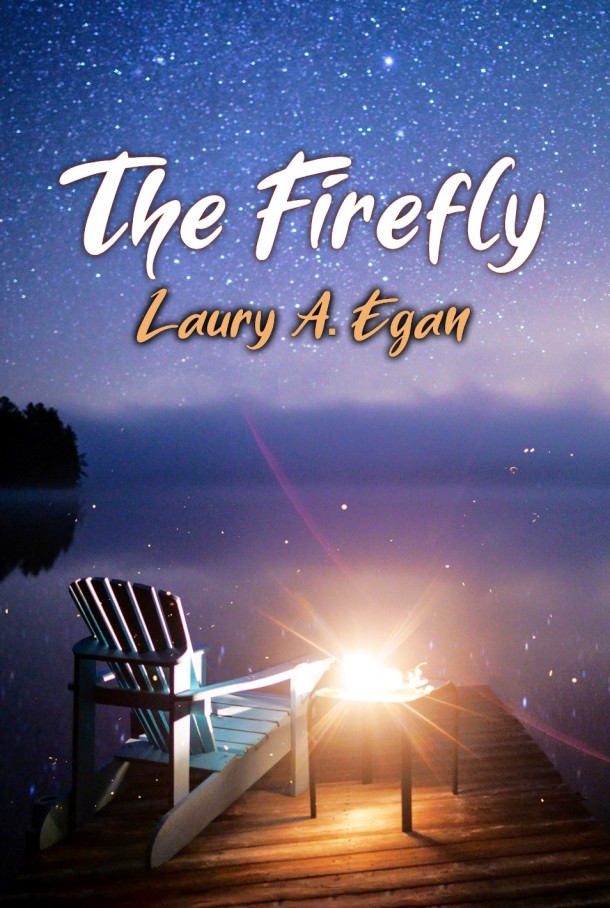
1964: A dark summer night on a still black lake. A lantern is lit at the end of a dock. A blond girl in white appears and begins to dance, her body illuminated like the fireflies surrounding her. A second girl emerges from a house and is beckoned forward. The two meet, swim, and then kiss. Thus begins an ethereal romance and a young woman’s journey into adulthood.
Robin Bennet, age fourteen, has been accidentally abandoned at a lakeside rental house in the Pocono Mountains. Her parents were arguing, and each believed the other had remained with Robin. Alone, Robin discovers that someone has been sleeping in the house and is now stealing vodka and snacks. A fifteen-year-old boy, Kieran, the intruder, appears and invites himself to dinner. Robin is charmed by him, especially when she learns he is the brother of the beautiful girl who magically appeared on the dock the night before. After Kieran leaves, the “Firefly” returns, lights the lantern, and circles around it until Robin joins her. The two swim and make love on the beach. When Robin awakens, the Firefly—Stella—has disappeared, and Robin’s mother arrives, announcing they will return to New Jersey immediately because she is divorcing Robin’s father. Frantic, Robin tries to find Stella, a search that continues while Robin builds a career as an architect in Manhattan, fails in marriage, and struggles with her sexual identity.
Excerpt
[Robin’s parents have left her alone in a rented lake house, each thinking the other would remain. The year is 1964, Robin is 14, and has just drunk some wine.] “Robin shuddered awake. She shook her head, which felt on the verge of aching, and lifted her gaze toward the lake. To her amazement, the lantern was lit on the dock. Standing by it was the Firefly, dressed in white, her blond hair bright against the darkness of the water and the forested hill beyond.
Robin rubbed her eyes. She must be having drunken hallucinations, but when she looked again, the beautiful vision remained. Excitement shot through her, and she lurched to her feet, descended the stairs with the bottle of wine, and walked down the grassy hill to the path, afraid to blink and lose sight of the enchanting image that lay before her. As she stepped onto the dock, the Firefly circled the lantern and offered her hands in invitation, her long fingers sweeping through the air with elegant fluidity. It appeared the girl was smiling, but perhaps this was what Robin hoped.
She made her way carefully. Some of the boards were uneven, and she didn’t trust her steadiness after drinking so much. Her ears also seemed filled with a pulsing sound, or was that the loud beating of her heart? Nearing the girl, Robin knew the figure was Stella because of the strong resemblance to Kieran—the same yellow hair, slender build, neat features, and gracefulness. But Stella was more magnetic, more enchanting. Instantly, the dinner with Kieran was forgotten. This moment was all present, all now.
Dazed, Robin stopped and stared at this beautiful apparition, one she struggled to believe was real. Almost afraid of breaking the silence with words, she whispered, “Hello.”
“Hello,” the girl replied.
“Stella?”
“Yes. Robin?”
“Yes.”
The water lapped against the dock pilings, and a bird called from a distant tree. Above, the dark sky shrouded them in an illuminated enclosure.
They smiled at each other.
Robin inched closer, reveling in the sensuous figure before her. Stella had blue eyes. Perhaps a paler shade than Kieran’s or maybe the lantern’s glittering reflections were creating the appearance of translucence. Her skin was unblemished, smooth, and creamy. The fragrance of Jean Naté floated in the air.
“I hoped you’d return,” Robin said.
“I’m glad. I waited until Kieran left.” Her expression was amused, flirtatious.
Robin sighed. “I don’t think the dinner went well. I mean, the meal was fine, but Kieran is hard to understand.”
Stella laughed. “He’s perfected the fine art of being secretive.”
“And you? Are you the same?”
“Yes, I suppose so. You’ll have to find out.”
This sounded like a teasing challenge. “I will,” she answered in kind. “Would you like some wine?”
Stella accepted the bottle, drank, and wiped her mouth. Her lips were perfectly cut, pink, and alluring.
“Thank you.” She handed the wine back to Robin, who took a swallow. “Good. Now, it’s a warm night, Robin. We should swim, don’t you think?”
Without waiting for a response, Stella began undressing. Underneath her blouse, against her tanned skin, a lacy white bra was revealed. Robin noticed that Stella’s breasts appeared to be larger than hers, but Stella was two years older.
When Stella leaned down to unbuckle her sandals, Robin unbuttoned her own shirt, overcome with shyness. Although she showered with girls after gym class, Robin had never exposed herself like this. She fixed her eyes on Stella, who had dropped her pants and stepped clear. The girl was slightly taller than Robin, with legs and arms that were lean and strong. Clad only in cotton underpants and a bra, Stella gave her a captivating smile, turned, and dove neatly off the dock. For what seemed like a minute, she stayed underwater until she resurfaced about fifteen feet away. Stella brushed back her short hair and watched as Robin took off her slacks and sandals and executed a clean entrance into the black water. Rising near Stella, the two swam closer to each other and kept upright by paddling their arms.
Robin felt a wave of dizziness pass over her. Because of the wine or because of the nearness to this radiant being? She waited for the girl to speak, to act. Instead, Stella laughed, the sound reminding Robin of wind chimes blowing in a light breeze.”
About the Author
Laury A. Egan is the author of eleven novels: The Firefly; Once, Upon an Island; Doublecrossed; The Swimmer; Fabulous! An Opera Buffa; The Outcast Oracle; Turnabout; Wave in D Minor; The Ungodly Hour; A Bittersweet Tale; TheOutcast Oracle; and Jenny Kidd as well as a collection, Fog and Other Stories. Four limited-edition poetry volumes have been published: Snow, Shadows, a Stranger; Beneath the Lion’s Paw; The Sea & Beyond; and Presence & Absence. Eighty-five of her stories and poems have appeared in literary journals. She lives on the northern coast of New Jersey.
I
live on the northern coast of New Jersey, with a view of the ocean
and the Manhattan skyline. Over most of my career, I worked as a
university press book designer, and though I do less photography due
to a partial walking disability, I still teach fine arts photography
to select adult students and illustrate some of my books. The
Firefly
is my 11th
novel, with titles ranging from psychological suspense, literary,
young adult, romance (though not standard), and comedy. I’m a
“bridge” writer so my audiences span general and LGTBQ readers.
My collection, Fog
and Other Stories,
was published in 2013 and about 85 poems have appeared in literary
journals and anthologies. Four volumes of poetry were issued in
limited edition. Following the August 12 publication of The
Firefly,
three more books are under contract with Spectrum Books: The
Psychologist’s Shadow
(Nov. 18), The
Black Leopard’s Kiss & The Writer Remembers
(December 16)—a literary work with magical realism—and in April
2024, Jack
& I,
about a boy with dissociative identity disorder. Really busy!
What
would people be most surprised to know about you?
That
I have a partial walking disability—great for writing because it
keeps me at my desk but awful for everything else.
Do
you have a favorite quote (either from your own books or those you’ve read)?
Here
are two I’ve written:
“Death
is in the house.” (Wave
in D Minor:
the first line of the prologue)
“Marnie
Hardwick and I met in the dark heart of February.” (Doublecrossed,
first line)
How
long have you been writing and what made you fall in love with
writing?
I
began with a poem at age 7, then a novel at age 12, stories and poems
in high school. I kept writing poems until I finally could devote
full time to writing after retiring as a book designer. My first two
publications (besides stories/poems) were poetry volumes: Snow,
Shadows, a Stranger
and Beneath
the Lion’s Paw.
Jenny
Kidd
and Fog
and Other Stories followed
as did many other titles. The inspiration to write came from being an
only child, one who lived several miles from town and didn’t have
many friends nearby. Writing was entertainment but also a way to
understand my thoughts and feelings. The natural beauty of the
area—ocean, bay, forest—were early subjects. Setting has always
been important to me.
Did
you always want to be a writer?
Yes.
(Briefly I considered being an astronomer but then realized I had to
be good at math!)
What
are your ambitions for your writing career?
I
would love to gain a more widespread readership and to have more
major-media reviews. Ha! Like the New
York Times?
What’s
your favorite part of writing?
The
first line…if I can devise a great hook that makes the reader
wonder “what will happen next?” Although I tend to truncate
dialogue in early drafts and need to amplify conversations in
revision, it’s great to get into a character’s voice and create
scenes between speakers that feel authentic and drive the plot.
Tell
us about your writing style.
Because
of my poetry and photography backgrounds, I’m attentive to natural
beauty and physical surroundings, so in some works, I utilize a lush
style, particularly in my literary novels such as Once,
Upon an Island,
which is dramatic and intense but also a portrait of an island, St.
Croix. I often have to cut descriptive passages and curb my tendency
to overwrite setting. Because I write in different genres, my style
varies accordingly. Wave
in D Minor
and the forthcoming The
Black Leopard’s Kiss & The Writer
Remembers were stylistically influenced by Virginia Woolf (for better
or for worse!), so these titles start more slowly than my
psychological suspense books, such as Doublecrossed.
What
does your writing process look like?
I
work seven days a week, mostly all day. I usually revise 25-40 times
and try to polish the manuscript and thus avoid embarrassing myself
in front of an editor (and future readers). The first draft is often
the quickest part of the process; the editing is the longest and
requires the most patience.
When/where
is your favorite time/place to write?
I
have a home office crowded by books (including my own), my
photographs, and my mother’s paintings, i.e. very little wall
space, which is also true of my house. Usually, I’m at my desk by
7:30 a.m. and tend to stop about 5:00 p.m., though sometimes I return
later if I have an idea or an error occurs to me.
Why
did you choose to write LGBT romance/fiction?
The
Firefly
isn’t a typical LGTBQ romance—it’s more of a portrait organized
around a romance. I tend not to write for a specific audience but
rather for all readers, yet I’m most comfortable writing about love
that arises between women, even when the relationship proves to be
treacherous, such as in Doublecrossed.
Emotionally, the woman-to-woman connections are closest to my own
experience, though I have often featured heterosexual relationships.
Do
you write any other genre?
Psychological
suspense is my primary genre, though I’ve published two literary
novels, Once,
Upon an Island
and The
Swimmer.
I’ve also made forays into young-adult fiction and comedy. The
Firefly
is in the romance genre, but it’s also a portrait of a young woman,
so not really the usual romance. I write what needs to be written.
Give
the readers a brief summary of your latest book or WIP.What
genre does it fall in?
The
Firefly:
“1964:
A dark summer night on a still black lake. A lantern is lit at the
end of a dock. A blond girl in white appears and begins to dance, her
body illuminated like the fireflies surrounding her. A second girl
emerges from a house and is beckoned forward. The two meet, swim, and
then kiss, beginning an ethereal romance and a young woman’s
journey into adulthood.”
The
Psychologist’s Shadow
(November 18): “…a
portrait of a compassionate, introspective therapist who finds
herself in a dangerous struggle with an unknown stalker. The novel is
a simmering literary suspense, one in which tension accumulates as
the reader gains insights during sessions with clients—one of whom
may be the psychologist’s shadow—and through the stalker’s
journal entries, which serve as a discordant counterpoint to the main
narration.”
Give
us a little insight into your main characters. Who are they?
Robin
can’t forget Stella, the Firefly, and as Robin passes through high
school, university, and the founding of her architectural firm, no
one compares to Stella, though they only spent a few hours together
when Robin was fourteen. Robin is creative, talented, ambitious, and
very hard working—perhaps too diligent. Her social life is
impoverished compared to her work. She yearns for the woman she can’t
find.
Will
we be seeing these characters again? Is this book part of a series?
No,
this is a stand-alone novel.
Which
actor would you like to see playing the lead character from your most
recent book?
Would
need a teenage actress as well as one in her 30s or 40s. Cate
Blanchett or Kate Winslet might be excellent or Saoirse Ronan for the
older Robin character.
What
genre/s do you enjoy reading in your free time?
Mostly
mysteries and suspense novels (UK or Nordic noir ). Literary work and
sometimes biography and occasionally poetry. I never read sci-fi,
horror, fantasy, or standard LGTBQ romance.
What
was the last book you read? What did you like about it?
I’ve
been working my way through all of Mari Hannah’s wonderful
detective mysteries (see Kate Daniels) and Kate Atkinson’s
brilliant titles, which are sly, wry, and clever (see the Jason
Brodie series). Reading Lauren Groff’s The
Monsters of Templeton,
which I’m unsure about—parts are first-rate; parts wander too far
from the main plot or else I haven’t quite “got it” yet.
Have
you held any interesting jobs while you worked on your books?
Before
I began my novels, I was employed as a book designer at Princeton
University Press and then freelanced for about 20 presses. I’ve
also worked as a freelance photographer at the Metropolitan Opera,
the Opera Company of Philadelphia, and venues at Lincoln Center. For
many years, I’ve taught fine arts photography to professionals. My
career pre-writing was varied and challenging.
How
do you relax?
Every
night I watch films, usually streaming. Then I spend about forty
minutes reading to wind down.
What
hobbies do you have outside of writing?
Because
I’m partly disabled, most of the activities I loved are no longer
possible to do: swimming in the ocean, playing tennis, going to the
Metropolitan Opera, traveling, and photographing, though I still
create images for some of my book covers.