Something Shady at
Sunshine Haven
War
correspondent Kate Tessler has followed the most dangerous news
stories around the world. But can she survive going home?
Injured
in a bombing, Kate returns to her hometown in Arizona to recover. For
the first time in her life, she's starting to feel her age (49), even
though she's living like a teenager again: staying with her father,
trying to understand why her sister resents her so much, and running
into people who still think of her as Kitty.
Seeing
her mother in an Alzheimer's unit is the hardest part – until an
old friend asks her to investigate suspicious deaths at that nursing
home. Is a self-appointed "Angel of Mercy" killing patients
to end their suffering? Are family members hastening their
inheritance? Is an employee extorting money and removing the
witnesses? Kate uses her journalism skills to track clues, but the
puzzle pieces simply won't fit.
If
Kate can't uncover the truth, her mother could be next on the
killer's list.
Try An
Accidental Detective short story
Get
a free short story
plus
bonus material when you sign
up for Kris Bock's newsletter.
This
free collection starts with a ten-page mystery short story, “The
Case of the Missing Monkey,”
set
in the world of The Accidental Detective series. That is followed by
information about the first books in the series, Something
Shady at Sunshine Haven and
Something Deadly on Desert Drive,
plus the first chapter of book 1. After that are three fun, short
stories originally written for children.
Praise for Something
Shady at Sunshine Haven
I
just LOVE your protagonist and the cast of characters that you
built.” – Sinclair Jayne, author
“A
really fun read and the perfect set up for a great series.” –
Lisa Honeycutt, author/illustrator
“Book
one was a good read, and I’m looking forward to a series with Kate
Tessler.” – Teresa Fannin, writer
“So
much fun! Her wry notes always make me laugh. The mystery seems so
impossible to solve. You have so many details and such a limited
ability for the heroine to get answers, which makes the story even
more engaging. I love her dry sense of humor.” – Emma J. Wallace,
author
Chapter
1 Preview: Something
Shady at Sunshine Haven
My childhood home had faded in the harsh
Arizona sun and now showed its age—rather like me. I’d never
dreamed of living here again after thirty years of traveling the
world.
This is temporary.
You’ll find a way out.
“Do you need help?” My sister’s
tone made it clear the correct answer was no. She’d already hinted
that picking me up at the airport had been one more burden in her
busy life.
“I got it.” I eased out of the car
and limped to the trunk to retrieve my travel backpack, still getting
used to my new cane. My thigh throbbed where the doctors had dug out
the shrapnel and stitched it back together with Frankenstein scars.
My usual fast stride was an awkward hobble up the walkway. My luggage
might have been “light,” considering it held everything I owned,
but it still nudged the airline’s weight limit.
The front door opened, and I forced a
smile. Jen disappeared inside, and Dad and I stood face-to-face.
Our smiles faltered. I dropped the
backpack and stumbled into his arms. Tension drained out of my body.
I blinked back tears and felt his frailty, the tremor in his hands.
He smelled like Dad with a hint of a newer scent, something that only
seemed to come from old men.
“Welcome home,” he whispered.
“It’s good to be home.” I needed to
rest and heal, and where better to do that than in my parents’
house? In a few weeks—I promised myself weeks, not months, and
definitely not years—I would be well enough to return to
journalism. “How’s Mom?”
“Good. Well, you know. She’s settled
in. She can’t wait to see you.”
I didn’t ask if she’d remember me. I
hadn’t noticed signs of Alzheimer’s on my last visit, but that
had been a year ago, and Jen assured me Mom had faded fast. She also
made it clear that since I was home with no job, it was my turn to
take care of our parents.
“Sit,” Dad said. “You need to rest
that leg.”
Behind him, Jen sighed loudly. “Don’t
coddle her. She needs to stay active.” You wouldn’t know from the
way she acted that Jen was younger by two years.
Dad winked at me. “Come and sit
anyway.”
Jen hustled outside. She glanced back
through the open door. “Welcome home.” She sped down the path
without waiting for an answer.
I closed the door and looked at Dad. “I
guess I caught her on a bad day.”
“No, just a day. Hey, a friend of yours
runs the care home. She gave me a message for you. Said it was
urgent.” He shuffled through the mail on the little table by the
door.
I couldn’t think of any friends in
Arizona. I hadn’t had any here since my childhood. My friends were
scattered around the world, wherever news was happening. If she ran
the nursing home, she might hope I’d write a story on the facility
to promote it, or do some free PR work. Drat. Were people going to
treat me like I had nothing better to do than give away my time?
Double drat. I did not, in fact, have
anything better to do. And I wanted a nap.
Dad handed me an envelope. I leaned on
the door and propped my cane against the table so I had two hands to
tear open the envelope. The handwritten message inside was brief:
Kitty—Please
come see me ASAP. I need your help.
—Heather Garcia
“She sounded
. . .” Dad hesitated. “She
asked about your journalism and begged me to bring you in as soon as
possible.”
Begged? This could be interesting after
all. But who was Heather Garcia? Someone I knew in high school, given
her use of my old nickname. Maybe I’d recognize her when I saw her.
Or maybe not. I hadn’t
changed a bit, of course, but other people sure looked different
after thirty years.
“We can go see your mother whenever
you’re ready,” Dad said.
See Mom in a nursing home, literally
losing her mind? I’d never be ready for that.
“No time like the present.” Plus I
could find out more about Heather Garcia’s desperate plea for help.
The nursing home was less than twenty
minutes away in low traffic. Automatic doors opened into a large
lobby with clusters of cushioned chairs, like a fancy hotel lounge. A
woman sitting behind a reception desk greeted Dad by name. When he
paused before a waist-high gate, something buzzed, and Dad pushed
open the gate. Handrails lined each side of the hallway ahead, but
the pale yellow paint took away some of the hospital feel. It smelled
of lemon-scented cleaning fluid. Better than medicine and sick
people.
Mom’s room was the third on the left,
small but cheerful, with a single bed, dresser, desk, and chair. She
looked like herself, although her face twisted in confusion when I
entered.
Dad said, “Look who’s here to see
you, Mother. Our daughter Kate has come home.”
Mom reached out with both hands. “Kitty!”
I hadn’t gone by that nickname in
decades, but it was better than being forgotten.
“You look tired,” she said. “And
you’ve cut your hair.”
I was tired, but I’d worn my hair short
for over a decade. Was she remembering me from some previous era? If
she thought I was still twenty, then “tired” was a delicate
understatement for how I’d changed.
She brushed hair off my forehead. “You
should grow your hair out again. It looks so nice long, when you
bother to style it.”
“Thanks, Mom.” Maybe she hadn’t
changed much after all. “How are you? Are you . . . happy here?”
“It’s a hospital. Too many people die
here. So much death! I’ll be happy when I get to go home.”
I wasn’t about to explain that she
would never move back home. This might be the one area where her
confusion benefited her.
She seemed cheerful enough as we chatted.
Still, seeing my parents fade wasn’t easy. She frowned at my cane a
few times, but she didn’t say anything about the bombing. Had she
forgotten? Had she never been told? I struggled to find safe topics
of conversation. Certainly not her health or mine, or the people
dying around her. We wound up mainly talking about my sister’s
kids, my smile stiff as I tried not to cry.
Shoes squeaked in the hall, and a loud
voice passed, talking about hospice.
“Don’t forget to visit Heather Garcia
while we’re here,” Dad said.
Was he giving me an excuse to escape? I
took it.
The director’s office was behind the
reception counter. I walked in, prepared to pretend I recognized the
person. A glimmer of familiarity hit me as the woman looked up from
her desk. She was my age, with brown hair to her shoulders, a strong
jaw, and dark eyes framed by laugh lines. She stood and extended her
hand. “Kitty! Or I guess you go by Kate now.”
“Yes, I prefer Kate.” Technically, my
name was Katherine. I’d grown up as Kitty, but I’d started using
Kate the first year of college as it sounded more like a serious
journalist.
She beamed as we shook hands. “I’ve
followed your career. You probably don’t remember me.”
The vague familiarity wasn’t clicking
into anything definite. “It was a long time ago.”
“Isn’t that the truth? I was two
years behind you. I took journalism my sophomore year, when you were
a senior.”
It was coming back. “You were on the
school paper that year.”
“Right. You were such a go-getter, even
then.”
We gazed at each other long enough for it
to become awkward. I’d never attended a high school reunion and
didn’t follow childhood friends on social media. Heather seemed
nice enough, but nostalgia for the “good old days” held no
appeal. I hadn’t hated high school, but people who called it
the best years of their lives had peaked early, had poor memories, or
were liars.
She broke our gaze and headed for the
door. Was this strange reunion over already? What about her request
for help?
She closed the door and returned to her
desk. “Please, have a seat. I shouldn’t have kept you standing,
with your leg. We were all horrified when we heard.”
I managed a tight smile. I wasn’t
surprised my injury had made the local news, or the grapevine anyway,
as I was something of a hometown celebrity simply for getting my
byline in the papers via the Associated Press. I
wasn’t supposed to be the news story, but at least I wouldn’t
have to explain the limp over and over. I sat in the chair across
from her and leaned my cane against her desk.
“I have a problem,” Heather said.
I tensed. “About Mom?”
“Oh, no, she’s delightful, very
popular with the staff and the other patients.” Heather shuffled
some papers on her desk. “No, this is . . . something else.” She
glanced at the closed door, leaned forward, and lowered her voice.
“Can I tell you something in confidence?”
My journalism senses, dormant and
neglected for weeks, gave a faint tingle before subsiding in
exhaustion.
“It depends. I won’t spread gossip. I
hardly know anyone around here to tell.” I smiled. “But if you
confess to murdering someone, I’ll have to report you.”
“Ha. Nothing like that. I hope.”
I stared at her. “You’d better tell
me what’s bothering you. If I can keep it a secret in good
conscience, I will.”
Her hands clenched on her desk. “I need
to know that you’re not here as a reporter.”
I nodded and settled back into the chair
with the trustworthy expression I’d mastered. Or possibly I simply
looked tired. “This is off the record. I’m on leave anyway.”
“Okay.” She spread her fingers and
pressed her hands on the desk. “Two of my patients died last week.”
My stomach churned. People came to this
place for the ends of their lives. My mother . . .
Shut down that thought. Snap into
journalist mode.
It was more of an ooze than a snap, but I
found a logical question. “Is that unusual?”
“Most of my patients are going to die
here eventually, except those in the short-term care wing. Still,
people can live for years with Alzheimer’s and dementia, if they
are otherwise healthy.” Now she had the soothing, professional
voice she’d no doubt perfected on hundreds of patients’ families.
“Our usual turnover is one every month or two.”
“Two in a week could be a normal
variation then.” Good. I sounded calm, even if part of my mind
still ran in circles screaming, “No! Not my mommy!” I cleared my
throat and asked, “Was something suspicious about these deaths?”
She sighed. “Not exactly. I mean, they
were old, but both women were in reasonable health and died suddenly.
That happens sometimes. Some sick people will survive for days or
weeks, even after they can no longer talk or eat. Others seem fine
one day and the next morning they’re gone.”
She gazed into the distance, perhaps
replaying some of those scenes.
Her focus snapped back. “These two were
like that. One complained of stomach pains and vomited a few times.
The other seemed unusually weak and confused, according to the nurse
who gave her medicine that evening. With Alzheimer’s patients, it
can be hard to identify a separate illness from the normal disease
progression.” Her voice wavered. “They were both dead by
morning.”
“The vomiting could be food poisoning.
That can kill a person in poor health.”
“These two incidents were a week apart,
and no one else got sick either time. With food poisoning, you’d
expect a wider outbreak.”
I frowned. “What was the cause of
death?”
“Officially, heart failure. We file
death certificates, but unless the death is clearly questionable, no
one would order an autopsy.” She clenched her hands together. “One
more thing. Two weeks ago, another woman got very ill, yet she
recovered. Now she’s fine. No one else in the unit got sick at the
same time and we don’t know what she had.”
“Food poisoning seems unlikely with
three patients sick that far apart. Could a virus spread that
slowly?”
“With the first woman, the nurse tested
for bacterial infections, and for antibodies, which should show up if
the immune system is fighting a viral infection. The
tests didn’t show any sign of either. The other two died so quickly
we didn’t have time to test. One of these cases alone wouldn’t
worry me, but the three of them together . . .”
Alarm bells clamored in my mind. Was I
reacting as a reporter or as a daughter? I dragged in slow, deep
breaths to force back the nausea and become the logical, skeptical
correspondent. I’d covered stories where hundreds or even thousands
of people had died in natural disasters or acts of war. Two old women
dying in a nursing home wasn’t much of a story.
Except that my mother was now an old
woman living in a nursing home. “What exactly do you suspect?”
“I’m probably being paranoid. But
once in a while, you hear stories about a nurse or aide who decides
the people in their care would be better off if they didn’t have to
suffer any more.” She looked away and whispered, “How could I
forgive myself if more people died because I wasn’t willing to ask
questions?”
“Have you talked to the police?”
“Definitely not.” Her eyes pleaded
with me. “It would be disastrous for the home. People would want to
remove their parents and spouses. Even if these deaths were perfectly
natural, the rumors would destroy us. I can’t do nothing, but I
also can’t put the entire operation at risk over a vague
possibility.”
I couldn’t argue with that. The press
would love a story about a murdering caregiver, and a false rumor
could taint a business for years. I suspected I knew the answer, but
I asked, “What exactly do you want from me?”
“I’d like you to investigate. You’re
a journalist, you know how to find out things, and I trust you more
than some random private detective. I want you to learn what
happened, which hopefully will put my mind to rest. Am I being
paranoid, or is someone killing my patients?”
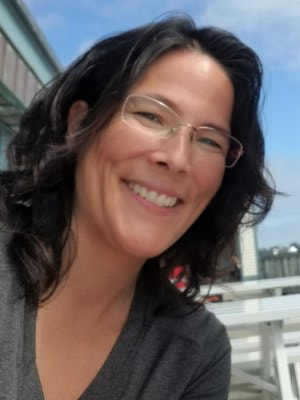
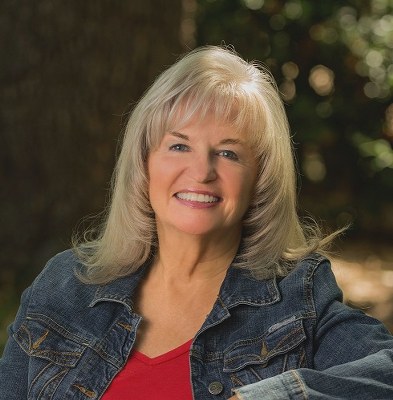
Author Bio:
Kris Bock writes novels of mystery,
suspense, and romance with outdoor adventures and Southwestern
landscapes. She has lived in ten states and one foreign country but
is now firmly planted in the Southwest, where many of her books are
set. Learn more at www.krisbock.com.
Kris’s cat café series is lighthearted sweet romance. Readers call
it heartwarming, fun, and delightful. Visit the Furrever
Friends Sweet Romance series page on Amazon US or
Amazon
UK.
Kris
also writes a series with her brother, scriptwriter Douglas J Eboch,
who wrote the original screenplay for the movie Sweet
Home Alabama. Follow the
crazy antics of Melanie, Jake, and their friends a decade before the
events of the movie. Sign
up for our romantic comedy newsletter
and get Felony Melanie
Destroys the Moonshiner’s Cabin.
These first two chapters from the novel Felony
Melanie in Pageant Pandemonium stand
alone as a short story. In the future, you’ll get fun content about
upcoming Felony Melanie novels and other romantic comedy news
and links. Or find book 1 at Amazon
US or All
E-book retailers.
Kris
writes for children as Chris
Eboch.
Kris Bock
Website
Blog
GoodReads
Author Page
BookBub
Amazon
US page or Amazon
UK page
Twitter
Facebook
Instagram