Showing posts with label military fiction. Show all posts

Tuesday, May 13, 2025

Too Much the Lion Release Blitz #rabtbooktours


US Historical Fiction/Civil War

Date Published: 05-13-2025

Publisher: Bariso Press


The soldiers did the fighting; the generals, the Infighting

In the waning months of the American Civil War, a delusional Confederate commander makes a desperate attempt to change the course of the South’s dwindling hopes by invading middle Tennessee. The tragic result of Lt. Gen. John Bell Hood’s misplaced hubris devastates his Army of Tennessee and alters the lives of the citizens of Franklin, Tennessee.

In a historical novel reminiscent of The Killer Angels, Too Much the Lion follows a handful of Confederate generals, infantrymen and local residents through the five days leading up to the horrific Battle of Franklin on November 30, 1864. The lives of soldiers ranging from Major General Patrick Cleburne to Brigadier General Hiram Granbury and from Sergeant Major Sumner Cunningham to Corporal Sam Watkins will be forever changed by Hood’s decisions and mistakes.

Franklin civilians like apprehensive and loving mother Mary Alice McPhail and teen Hardin Figuers, desperate to serve the Confederacy but too young to enlist, are ensnared in the events that will bring death and devastation to their very doorsteps. Devout Confederate Chaplain Charles T. Quintard must reconcile his religious beliefs with his support of slavery. Slaves like the elder Wiley Howard and the inquisitive young Henry B. Free are trapped on the fault line between what has been and what could be.

Too Much the Lion offers an unvarnished account of the dying days of the Confederacy in a powerful and moving narrative of honor and betrayal, bravery and cowardice, death and survival. Told with poignancy and honesty by an accomplished novelist, Too Much the Lion achieves for the Battle of Franklin what The Killer Angels did for the Battle of Gettysburg, providing a classic fictional account of one of the Civil War’s pivotal encounters.


About the Author

Preston Lewis is the award-winning author of more than 50 western, historical, juvenile, and nonfiction works.  In 2021 he was inducted into the Texas Institute of Letters for his literary achievements.

Western Writers of America (WWA) has honored Lewis with two Spur Awards, one for best article and the second for best western novel.  He has received ten Will Rogers Medallion Awards (six gold, two silver and two bronze) for written western humor, short stories, short nonfiction, and traditional Western novel.

Lewis is a past president of WWA and the West Texas Historical Association, which named him a fellow in 2016.  He holds a bachelor’s degree from Baylor University and a master’s degree from Ohio State University, both in journalism.  Additionally, he has a second master’s degree in history from Angelo State University.  He lives in San Angelo, Texas, with wife Harriet Kocher Lewis.


Contact Links

Website

Facebook

Blog

Goodreads


Purchase Link

Amazon


Monday, May 5, 2025

Too Much the Lion Teaser #rabtbooktours


US Historical Fiction/Civil War

Date Published: 05-13-2025

Publisher: Bariso Press


The soldiers did the fighting; the generals, the Infighting

In the waning months of the American Civil War, a delusional Confederate commander makes a desperate attempt to change the course of the South’s dwindling hopes by invading middle Tennessee. The tragic result of Lt. Gen. John Bell Hood’s misplaced hubris devastates his Army of Tennessee and alters the lives of the citizens of Franklin, Tennessee.

In a historical novel reminiscent of The Killer Angels, Too Much the Lion follows a handful of Confederate generals, infantrymen and local residents through the five days leading up to the horrific Battle of Franklin on November 30, 1864. The lives of soldiers ranging from Major General Patrick Cleburne to Brigadier General Hiram Granbury and from Sergeant Major Sumner Cunningham to Corporal Sam Watkins will be forever changed by Hood’s decisions and mistakes.

Franklin civilians like apprehensive and loving mother Mary Alice McPhail and teen Hardin Figuers, desperate to serve the Confederacy but too young to enlist, are ensnared in the events that will bring death and devastation to their very doorsteps. Devout Confederate Chaplain Charles T. Quintard must reconcile his religious beliefs with his support of slavery. Slaves like the elder Wiley Howard and the inquisitive young Henry B. Free are trapped on the fault line between what has been and what could be.

Too Much the Lion offers an unvarnished account of the dying days of the Confederacy in a powerful and moving narrative of honor and betrayal, bravery and cowardice, death and survival. Told with poignancy and honesty by an accomplished novelist, Too Much the Lion achieves for the Battle of Franklin what The Killer Angels did for the Battle of Gettysburg, providing a classic fictional account of one of the Civil War’s pivotal encounters.


Foreword


Too Much the Lion is the story of the Battle of Franklin and the five days leading up to the disastrous conflict as lived by select generals, infantrymen, and civilians in the waning weeks of the Confederacy. In a war filled with tragic encounters, this was one of the most heartrending, yet least remembered battles of the Civil War, largely because it occurred in the Western Theater, far removed from the aura of Robert E. Lee and the Army of Northern Virginia.

The Confederate Army of Tennessee produced no Robert E. Lee, but instead fought under a succession of mediocre commanders whose battlefield triumphs were limited to a single decisive but bloody victory at Chickamauga. The army’s commanders had little else to show for the sacrifice of Rebel men and boys. Though the overall leadership lacked the tactical flair of a Lee or a Stonewall Jackson, the Army of Tennessee possessed some superb generals such as cavalryman Nathan Bedford Forrest and division commander Patrick Ronayne Cleburne, who both appear in this account, though the focus is on the lesser-known Cleburne and his division.

With more than 8,500 combined casualties, the Battle of Franklin does not make the top twenty list of Civil War battles with the most losses. Even so, Union and Confederate forces endured five of the most ferocious hours of combat during the War Between the States. Besides the hubris of Army of Tennessee commander John Bell Hood, the events of the preceding night at Spring Hill contributed to the next day’s ill-fated attack—dubbed “the Pickett’s Charge of the West”—at Franklin.

In one of the greatest blunders of the Civil War, the Union army slipped past the Army of Tennessee during the night at Spring Hill, Tennessee, and escaped the trap Lieutenant General Hood had set but failed to execute. Charges and countercharges about who was at fault echoed through the years, and historians remain conflicted about who forfeited one of the South’s last opportunities for a victory over Union forces. The interpretations of the events at Spring Hill in Too Much the Lion are entirely those of the author after considerable research and head-scratching.

In addition to the many generals mentioned in this historical novel, two Confederate infantrymen who left accounts for posterity provide perspective from the viewpoint of the foot soldier. While novels about war rightfully focus on soldiers, battle takes its toll on civilians as well, so two Franklin families—the Carters and the Figuers—provide perceptions beyond those of the troops. Two slaves serving Confederate officers as manservants—one elderly and one in his teens—also enter the narrative.

Except for two characters, all the names listed are those taken from historical accounts. The name of a Franklin doctor was fictionalized, and the last name of the slave named “Henry” was added since the historical account only listed his first name. Otherwise, the names are actual, including the lists of casualties and the causes of their deaths. The interpretation of each character is that of the author, based on his research.

Too Much the Lion is told entirely from the Confederate viewpoint, both soldier and civilian. It is important to remember that by late 1864, both Southern combatants and noncombatants had endured three years of death and deprivation. Both citizens and warriors alike were tired of war, its hardships, and the uncertainty it created for their futures.

For those unfamiliar with the organization of a Confederate army, the Army of Tennessee operated under Lieutenant General John Bell Hood in overall command of three infantry corps and a cavalry corps under the direction of Major General Nathan Bedford Forrest. This account focuses on the corps under the command of Major General Benjamin Franklin Cheatham of Tennessee. His three division commanders included Major General Patrick Ronayne Cleburne of Arkansas and Major General John C. Brown of Tennessee, who are pivotal in this account. Major General William B. Bate of Tennessee also served as a division commander under Cheatham, but he played a lesser role in the events as depicted in Too Much the Lion.

Three brigades under the commands of brigadier generals Hiram B. Granbury of Texas, Daniel C. Govan of Arkansas, and Mark P. Lowery of Mississippi reported to Cleburne, their division commander. Between seven and ten regiments designated by number and state served under these three brigadier generals.

Two of the four brigades in Brown’s division appear in this account. Commanders of those brigades were brigadier generals States Rights Gist of South Carolina and Otho F. Strahl of Ohio. While other generals and combatants show up in this account, their roles are nominal in this telling of the story of the Battle of Franklin.

In compiling this narrative, the author has attempted to stay within the historical framework of the events leading up to and culminating in the Battle of Franklin and its aftermath. Occasionally, time elements may have been compressed or slightly altered for the sake of the overlapping narratives from the different viewpoints.

If nothing else, perhaps Too Much the Lion will drive readers to the historical accounts of the Battle of Franklin to make their own assessments and draw their own conclusions of the tragic encounter in the waning months of the Civil War. If Too Much the Lion accomplishes anything, perhaps it will give Patrick Ronayne Cleburne his due as one of the noble generals of the Civil War, much like The Killer Angels elevated Joshua Lawrence Chamberlain into the public consciousness.

Too Much the Lion is a novel of war, and war is the failure of man to live up to the “better angels of our nature” as President Abraham Lincoln first used the term in his 1861 inaugural address before the start of the conflict that killed more Americans than any other in our nation’s history.

By its very nature, however, any novel of war is also an anti-war novel, for it shows the dire consequences on individuals of political and military deceit and hubris. Perhaps Too Much the Lion offers lessons for today if we are honest and humble enough to accept them.


About the Author

Preston Lewis is the award-winning author of more than 50 western, historical, juvenile, and nonfiction works.  In 2021 he was inducted into the Texas Institute of Letters for his literary achievements.

Western Writers of America (WWA) has honored Lewis with two Spur Awards, one for best article and the second for best western novel.  He has received ten Will Rogers Medallion Awards (six gold, two silver and two bronze) for written western humor, short stories, short nonfiction, and traditional Western novel.

Lewis is a past president of WWA and the West Texas Historical Association, which named him a fellow in 2016.  He holds a bachelor’s degree from Baylor University and a master’s degree from Ohio State University, both in journalism.  Additionally, he has a second master’s degree in history from Angelo State University.  He lives in San Angelo, Texas, with wife Harriet Kocher Lewis.


Contact Links

Website

Facebook

Blog

Goodreads


Purchase Link

Amazon


RABT Book Tours & PR

Thursday, April 10, 2025

In Harm's Way Release Blitz #rabtbooktours


Book 1 of The Sea Hawkes Chronicles


Historical Fiction/Nautical Fiction

Date Published: April 10, 2025

Publisher: Acorn Publishing


The man who fights for his family is far more dangerous than the one who fights for his king.

Colonial sea captain Jonas Hawke returns home to Norfolk after a year-long voyage only to have his ship and its valuable cargo seized by the British Royal Navy. As the royal governor further tightens the noose on trade, Jonas is thrust into the chaos of a growing rebellion. Desperate to support his family, he sets out to find work. When he is denied a commission with the newly formed Continental Navy, he outfits his own vessel as a private ship-of-war and voyages to the Caribbean in search of enemy merchant ships he can capture and friends he can trust.

But dangers multiply on the unforgiving sea. The Royal Navy reacts mercilessly to the threat posed by privateers like Jonas. How will Jonas fare now that he has boldly defied the King of Britain to preserve his family? And what will happen to his loved ones while he is away, engulfed in a war to oppose tyranny in the name of freedom?


About the Author

Naval Academy and Naval War College graduate Thomas M. Wing retired after thirty-two years as a Navy Surface Warfare officer. He served more than ten years at sea and twenty-two years ashore in increasingly important tactical and operational billets. A dedicated sailor for half a century, he created the Continental Navy Foundation, served as its executive director, and commanded its brigantine, Megan D. 

He wrote In Harm’s Way from a desire to explore the topic of America’s early sea warriors and how they struck fear into the hearts of British shippers around the globe. Thomas’s award-winning first novel, Against All Enemies, was released in 2023 by Acorn Publishing. He resides in San Diego with his wife and daughter and a cat and a dog. Whatever free time he has is spent on the water.


Contact Links

Website

Facebook

Twitter: @thomasmwing1

Goodreads

Instagram 


Purchase Link

Amazon


a Rafflecopter giveaway

RABT Book Tours & PR

Friday, January 24, 2025

Master Version 1.1 Book Blitz #rabtbooktours


Technothriller, sci-fi thriller, war fiction

Date Published: December 16, 2024


Master is a lone soldier, relying on near-future technology and his own creativity to survive in the Gray Zone of the Ukrainian warzone.

The year is 2028. The simmering conflict has transformed into a new kind of battlefield, where military streamers compete for followers and views while carrying out often deadly missions.

Armed with an arsenal of experimental technology—including an advanced computer-brain interface, a multifunctional prosthetic arm, AI, and drones controlled with his mind—Master embarks on a desperate run for his life as he searches for missing fellow streamers.

The book contains 40+ original illustrations and maps. The maps and related action follow actual geographical places down to smallest detail.


About the Author

Master Version 1.1 is my first book. I’ve been writing for most of my life—not books, but code. I’m a software programmer. Together with Martynas Majeris, who translated Master Version 1.1 into English, we run a tiny company—essentially a two-and-a-half-man operation (sans Charlie)—but one that’s extremely successful in its field: amCharts. We estimate that our data visualization libraries are now used by at least half of the Fortune 500 companies and thousands of smaller businesses. Besides this main activity—which, even after nearly two decades, is still fun—I also enjoy long-distance bike travel and participate in competitive sailing events, both fully crewed and double-handed. When it comes to my reading habits, I prefer science fiction. Like most readers, I have my favorite writers, such as Neal Stephenson, and eagerly await their new releases. In between, I enjoy giving new authors a try. Sometimes, they blow me away and become new favorites, like Andy Weir. Unfortunately, there’s also a fair share of disappointment. Every time I felt let down by a new book, I thought, I could do better. On one such occasion, I sat down and wrote my first chapter. Then I wrote another. And a couple more. To make my texts believable, I wrote about things I know well. As a member of the Lithuanian Riflemen Union—an organization of voluntary fighters ready to take up arms and fight Russians if they come this way—and a regular participant in tactical drills and exercises, I’m well-versed in warfare. I know my way around guns and drone combat. You can find me on BlueSky @marcelionis.


Contact Links

Website

Facebook

"X"


Purchase Link

Amazon


RABT Book Tours & PR

Friday, February 23, 2024

Ella's War Book Blitz #rabtbooktours


Historical Fiction


It's 1943 on the American home front, and Ella's pent-up, common-law husband finally decides to leave their farm and enlist. Ella must either depart their seafaring town in coastal Delaware to pursue other dreams inland or try to save their farm. Their grade-school son, Reese, won't budge, and Ella sees that farmers have a patriotic duty to stay on the land.

The bay and ocean waters before them have been preyed upon by German U-boats, and their village has become a refuge for survivors. When an officer from a surrendered German submarine is sent to her as part of POW farm labor, can Ella embrace the help in order to survive? And what happens when Dieter becomes more than a hand to her, amidst prying eyes and under her beloved but conflicted son's watch? How will she choose when her explosive husband returns from Europe wounded from infantry duty against the Germans?

In ELLA'S WAR, we travel a journey amongst women and men whose lives are deeply altered by the circumstances of WWII. What heroic or questionable choices must they make to be true to themselves and come through the great conflict?


 About the Author

Rusty studied creative writing at the University of Virginia and has been a full-time freelance writer for most of his career. He owns The Writers Studio, a marketing/copywriting practice located just outside of Philadelphia. He led the Advanced Novel Writing Group at the Writers Room/Writers Corner, a writers co-op in Doylestown, Bucks County, Pennsylvania, and is a member of the Rebel Writers, a highly select novelist critique group that was highlighted in Writer's Digest in the article "Plotting a Novel Group".


Contact Links

Website

Instagram

LinkedIn


Purchase Links

Amazon

B&N

Kobo


RABT Book Tours & PR

Saturday, October 21, 2023

RIP Challenge 2023 Day 21: The Final Countdown


PG

Ornery Owl's Rating
🌟🌟🌟🌟

Mini Review

This is a fun "what if" story postulating the well-known theory that you shouldn't mess with the past because it could change the present. On a nit-picky note, I really hate it when scriptwriters refer to grown-ass women as girls. Katharine Ross was forty years old when this movie was released. She hadn't been a girl in 22 years. Could they not have referred to her as a lady? 


Wednesday, October 18, 2023

RIP Challenge 2023 Day 18: Red Dawn


PG-13

Ornery Owl's Rating
🌟🌟🌟🌟

Mini Review

A well-made film with a stellar cast. Like Uncommon Valor, which Patrick Swayze starred in a year earlier, it's a 1980s action film with a patriotic theme. Although some scenes are rather improbable and nobody but an action movie character could survive them, the movie raises some thought-provoking questions. 

Amazingly enough, this is my first viewing of this movie, even though it was released the year after I graduated from high school.


Free use image from Open Clipart Vectors

Like a fine wine, Ornery Owl gets more acidic with time.
Or something like that.


Tuesday, October 17, 2023

RIP Challenge 2023 Day 17: By Dawn's Early Light


TV 16+

Ornery Owl's Rating
🌟🌟🌟🌟

Mini Review

This is an overall excellent late Cold War cautionary tale depicting the potential for nuclear devastation fueled by misunderstandings. I knocked a star off my rating because I couldn't give a tin shit about the romantic drama between Major Cassidy, played by Powers Boothe, and Captain Moreau, played by Rebecca de Mornay. This unnecessary subplot didn't appear in the book the movie is based on. 

I was much more interested in the dynamic between General Alice (James Earl Jones) and the President, played by Martin Landau. These characters were ready to make the necessary sacrifices to prevent World War III while Colonel Fargo and the Secretary of the Interior were chomping at the bit to light the fuse. Rip Torn gives an excellent performance as the war-mongering Colonel Fargo and Darren McGavin is superb as the easily manipulated Secretary of the Interior put in power when the President is presumed dead.

~Ornery Owl Has Spoken~

Image by Ivan Yanev from Pixabay

Ornery Owl is ready to command the Pie-Throwing Battalion against the Water Balloon Tossers and Paint Ball Squad.


Friday, October 13, 2023

Against All Enemies Release Blitz and Giveaway #rabtbooktours


 Military Fiction

Date Published: October 13, 2023

Publisher: Acorn Publishing


When the People’s Republic of China unleashes a devastating attack on the United States, newly appointed Naval Commander Bill Watkins and his crew are suddenly alone, deep in the enemy’s backyard, and unable to communicate with naval or national leadership.

At home in Washington, the president is detached from reality. Survivors of his cabinet contend with military leadership for control, some to save the nation they serve, others in pursuit of personal power. As America becomes alienated from her allies, Russia begins a campaign that creates heightened fears of nuclear annihilation.

Bill must navigate a political minefield to find friends among China’s neighbors, while undertaking a role that demands he take unimaginable risks and wrestles with the question: What losses are acceptable in order to win?


About the Author

 A Naval Academy and Naval War College graduate, Thomas M. Wing retired after thirty-two years as a Navy Surface Warfare officer. He served in guided missile destroyers and frigates, as well as with destroyer squadron, cruiser destroyer group, numbered fleet, and Joint Task Force staffs, where he planned and executed real-world joint operations at the operational and strategic levels of war. He also participated in naval combat during Operation Praying Mantis in the Middle East in April, 1988. He has taught Coast Guard licensing courses and has held a variety of sailing licenses, including Master and Master of Sailing Vessels, Upon Oceans. As well, he founded and served as Executive Director for the Continental Navy Foundation, which conducted experiential education at sea for young people 13-17 years of age. He also commanded the Foundation's tall ship, the brigantine Megan D.

His novel, Against All Enemies, resulted from a random thought during a period of political tension between China and the U.S. What if that political tension included cruise missiles flying in from the sea to strike the San Diego waterfront?  Thomas M. Wing resides in San Diego with his wife and daughter, two cats, and a dog. He still spends whatever free time he has on the water.


Contact Links

Website

Facebook

Twitter: @thomasmwing1

Goodreads

Instagram


Purchase Links

Amazon

B&N


a Rafflecopter giveaway
RABT Book Tours & PR

Tuesday, September 26, 2023

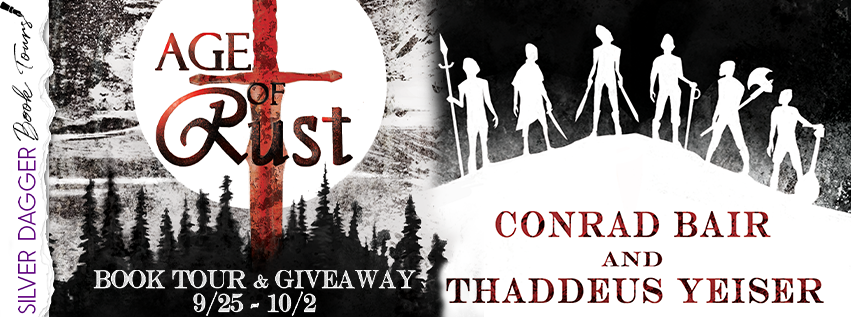
Age of Rust Giveaway and Guest Post #SilverDaggerTours


Age of Rust is a tale of displaced youth, the struggle for life, and the peril of love in war-time.


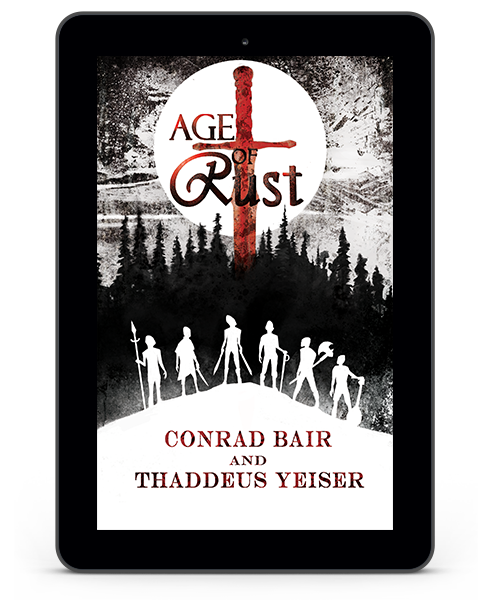
Age of Rust

by Thaddeus Yeiser & Conrad Bair

Genre: Dystopian War Fiction

No records show how it happened, though everyone has their beliefs as to why the golden age of man fell seven hundred years ago. Since, humanity has managed to rebuild a modest civilization from the ruins. Now a medieval war begins to ravage the land once known as America. The lives of six young men become ensnared in the violence as they serve the Eastern army. Chief among them are Tavin, the son of a respected general and Seneca, a physician drafted away from his studies.

Loved ones left at home are threatened when Kayzitt, the zealot Western officer, leads his marauders behind enemy lines. His cruel methods devastate every community he encounters and the East seems doomed to fall under its own weight as he makes a name for himself in the legends of the militaristic West.

But the six heroes notice that something has changed inside themselves. Their minds are subtly connected in a way that cannot be explained but lends them increased prowess on the battlefield. Inevitably, their skills place them on a collision course with Kayzitt that will shape the future of the nation.

Age of Rust is a tale of displaced youth, the struggle for life, and the peril of love in war-time. It is an ode to masculine vainglory and the valor in conflict as it bridges with the feminine witness of human corruption and loss of innocence.

Amazon * Inksmith Publishing * Bookbub * Goodreads


Age of Rust - Excerpt 1:


We say that we would do anything for each other, but in the worst times will they listen to me? Will they be able to comprehend what is at stake? Will they rise above themselves and meet the challenge? Can they possibly understand how wrong this can all go? We call ourselves warriors, but I question if they know what that title entails.

The howl of a lone wolf found Tavin’s ears, making them hum with the steady tone despite the miles between. As if to listen closer, Tavin pulled away from the girl, peeling his lips off hers and craning his neck to look out the chapel window. Hauntingly, the howling stopped, slipping off at the end of its note, but Tavin kept his gaze beyond the stone walls. Something about the timbre had snapped him to attention. Outside the night was cool and still, the moon and its light had disappeared behind the mountains around the town and on the horizon was the hint of sunrise.

Do you not like wolves?” asked the girl. “Do they scare you? I think they are beautiful creatures. Lovely, when you get past the teeth.”

Tavin turned to her again. She was soft in the gentle light of night, a thin thing who was admirably young and energetic.

No, I’m not afraid of wolves.”

He flashed her a reassuring smile. It was his smile that people were always drawn to. They could not help but smile back. He touched the woman on the jaw and rubbed the same place she had been rubbing his beard moments earlier. Their eyes locked for a lingering, peaceful moment.

Feeling the hardness of the ground against his knees, Tavin stood to relieve it. He covered her kindly with the blanket they had borrowed from the chapel offices, and then walked to the window of their steeple hideaway. Tavin had looked forward to sneaking up here with a woman for the past week, but now something chewed at his stomach.

Do you even remember my name?” she asked with charming accusation.

Tavin could feel the arrogance in his automatic grin.

Of course, Marlies. Marlies, Marlies, Marlies,” he echoed.

I’m impressed, all you soldiers tend not to care about the details.”

Well I’m not most soldiers,” Tavin said, his eyes, now adjusted to the moonlight, on the flickering lights in the distance. He propped his elbows on the cold hard surface and tried to look closer. Campfires, he assumed, but they looked different. The drift of chilled air through the window had an anxious scent.
“I thought as much when I first saw you in the tavern. You have such serious eyes for how you danced around.” She made more room beneath the blanket again and adjusted herself. “Here, I’m cold, get under the blanket. What interests you so much about the window anyway? Are you trying to see the Western camps?”

Tavin paused, then turned and rejoined her as she requested. It was much warmer beneath the blanket and she was much softer than the stone walls.

Perhaps I was,” he said, “there are three thousand of them out there in the fields. We should be able to see them from up here. But it’s still too dark.”

Three thousand? Really?” she asked with a tone of false surprise. “My father was saying that there are only four hundred of you here to guard the town. Is that true?”

Yes, it's true,” Tavin sighed. “I did not think it a point of discussion.”

“Don’t be naïve.” She hit his shoulder. “It is the only point of discussion these days. Why do you think they haven’t attacked yet? It makes me so nervous, the way they sit out there and burn their fires and ride their horses close to the walls and shoot arrows at the blockhouses.”

Tavin sighed again. The horizon was a bright purple now but there would be another hour or two until the sun rose.

Well, they don't exactly know how many of us there are, so… we'll let them take their time. At least until reinforcements can get here. As soon as that happens my friends and I can finally rotate to the fortress.”

It figures. I didn’t think this was going to last long,” she replied. “You and I, I mean; though the war as well. I suppose I never thought either would drag on like it has.”

Drag?”

No offense, the war drags, whereas you have been a welcome surprise.”

“Well the reinforcements still haven’t come. And there’s been no word to suggest they are coming soon. You might have to put up with me a little longer yet.”

But there was a chewing at his stomach that made Tavin feel the beginnings of terror. The way his words reverberated off the stone walls of the chapel pinnacle, cold and hollow, he could feel that they were wrong. He stirred beneath the blanket again, agitated.

“What would happen if the West takes the town? What would happen to us? Am I just another notch on your scabbard? I think that we could still be happy no matter who is in charge.”

Tavin glanced to where his swords lay propped against the wall. For a second, he regretted having ever removed them. They were a defensive comfort in times where comforts were few.


THAD’S ANSWERS

Where did you come up with the names in the story?

-This world is supposed to feel like a place out of time, so I took a bunch of different world cultures and threw all the names in together. You’ll see names ranging from Greek to African to modern American.

What makes a good story?

-It’s a bit of a cliche, but a good story should create an emotional response. More specifically I think there’s a bit of a contract between a writer and their audience. The audience agrees to follow the writer on their journey. They invest themselves into the storyline and the characters, and they begin to form expectations. In exchange the writer should “pay off” those expectations to at least some degree. Subversion can also be a great tool in modern stories, but there always needs to be some reward for the audience’s time and attention.

Do you try more to be original or to deliver to readers what they want?

-This ties in well with my previous answer. There has to be a balance between delivering original ideas (which often means subverting audience expectations) and giving readers what they crave. Readers don’t want to be able to predict everything that will happen in a story, but they also don’t want their time wasted. I struggle with threading this needle at times, but here’s an extremely simple example. Let’s say that a story has a mailman for a main character. One of his struggles is that every day he is worried about being attacked by a dog. If you don’t eventually pay off that plot thread, by having him confront a dog, your readers will be disappointed, but at the same time you can be original about it by having the interaction with the dog go completely against what the audience is anticipating.

What is your writing process? For instance, do you do an outline first? Do you do the chapters first? What are common traps for aspiring writers?

-A consistent writing process is absolutely critical when working with a partner. We have always tried to get a 30,000 foot view of a story first. Where do the characters begin and most importantly where do they end up? Then we like to zoom in a bit and go through the events chapter by chapter and figure out what the main story beats will look like. Finally, after we agree on how everything will play out, we can start working through the actual writing. We like to focus on the main action and the dialogue first, and then work on prose second. The first draft will resemble a fleshed out screenplay and the second draft will finally take the shape of a novel, and then from there comes the back and forth of editing.

A common trap would probably be the resistance to plan out their stories. It can seem tedious and it's so tempting to just get right into the story, but often writers will write themselves into a corner, and end up creating more work for themselves.

Do the characters all come to you at the same time or do some of them come to you as you write?

-I find that most of the characters will reveal themselves during the initial storyboarding. A few more will come along later, but it's rare that I am writing the meat of the story and discover a new character that should inhabit a scene. That could be a flaw in my writing where I might have tunnel vision and not want to stray from my initial plan, but other than a few minor inclusions it hasn’t really occurred to me that I was missing a key character.

More often than not I have included too many characters. As a matter of fact, while writing the first book, we deleted an entire villain from the first half of the book because the character was a redundancy.

What kind of research do you do before you begin writing a book?

-For Age of Rust I had to do a considerable amount of research on the American landscape, and geography. The story’s technology is horse and buggy and the characters move around a lot so understanding distance is critical. I want to make sure that the time it takes for characters to traverse from point A to point B is at least plausible. I would also have to take into account terrain, obstacles, and the time of year. Would there be snow on the ground in this part of the country? What time is sundown in March? These elements could be tedious to collect but it’s amazing what little details will pull a reader out of a story.

What is your favorite part of this book and why?

-I don’t want to spoil anything so I will just say that my favorite part of the second book is that we didn’t end the saga after two books. We originally wrote a complete end to the series after this latest book, and felt like we’d run out of ideas. I had always envisioned at least a trilogy so I was fairly disappointed, but thought it was a solid ending. Eventually inspiration struck and we formed a third story that both expanded on the first two books and brought the story to a much stronger and more satisfying conclusion.

We ended up rewriting the last quarter of book two into the story we have today and we couldn’t be more proud.

Tell us about your main characters- what makes them tick?

-The one consistent element with our main characters is that they’re young people who are completely over their heads. They’re all part of this generation that had its life upended by war. No matter who they are, danger is lurking somewhere. Sometimes the danger is frantic and right in front of them. Sometimes danger is something they’re heading towards, or running away from. Sometimes the danger is far away on the horizon but they know it’s only a matter of time. I enjoy exploring how different people react to these pressures. Some people collapse, some people rise to the occasion. This is a collection of characters who feel the wolf at the door almost every moment of their life and it makes for a harrowing existence.

The fun thing about these characters is that the quiet moments, those rare times that the wolf is nowhere to be seen, are beautiful scenes to write.

What book do you think everyone should read?

-And Then There Were None by Agatha Christie. It is the perfect mystery novel from the perfect mystery writer. Forgive me if I spoil anything (though it was published in 1939 so I think the statute of limitations is up). The way she structured the events made it virtually impossible to solve the crimes, and at the end of the book you are left guessing who could have been the murderer. She actually had to add an epilogue from the perspective of the killer, confessing their crimes, for the audience to have any clue what really happened. I think a huge struggle when constructing a mystery is telegraphing your moves to the audience, and she never made that mistake. Riveting novel.

Do you have a favorite movie?

--Yes, Blade Runner. I first watched it in High School and my love for the film has only deepened with time. Blade Runner is a full sensory experience. The visual elements are astounding and the sound track basically invented a genre, but the ideas it presents are simply profound. The idea that an android, designed to kill and given no emotions, could discover its own humanity in the face of annihilation is staggering. The movie blurs the lines between hero and villain better than any other story I’ve ever watched/read. I cannot recommend the movie enough.

If you could tell your younger writing self anything, what would it be?

-I would tell my younger self that comparison is the enemy of joy. Obviously many things that I’ve written have not worked as a story, or they were missing critical elements. They could never measure up to better works but they still had value. I practiced, I made mistakes, and I got a tiny bit better as a storyteller. No writer should ever feel ashamed of their work.

How long on average does it take you to write a book?

-We’re currently at about 9 months or so to go from the storyboard to completed work. I don’t know whether we should speed that up or draw it out, but the timeline seems to be fairly consistent.

How long have you been writing?

-I’ve been writing since I was 11. I started out writing Star Wars fan fiction. Yes, you read that correctly.

Do you prefer to write in silence or with noise? Why?

-I am easily distracted, so silence is a must, but I also enjoy sounding my dialogue out at times, and music or TV can interfere. That said, some nature sounds in the background can be a plus.

What did you enjoy most about writing this book?

-This series has given me an opportunity that not all writers get. It’s been a chance to craft a book series with my best friend. Every idea, story beat, character, has to be agreed upon, and has made us better writers than we would have been on our own. There were many three or four hour phone calls spent discussing chapters, or trying to figure out how to make certain plot points work. The feeling of finally getting past a hurdle never gets old. Those conversations are some of my favorite memories, and I will cherish them the rest of my life. I don’t necessarily think it would work for everyone, but I’m glad we’ve had this opportunity.

If you knew you'd die tomorrow, how would you spend your last day?

-Just one day? Well, traveling the world is out so I would try and talk to as many family and friends as I possibly could. I would apologize that I didn’t spend more time with them, tell them my favorite thing about them, and tell them I love them. Then I’d spend the last part of the day with the love of my life and make sure she knew how much she made my life better.

What kind of world ruler would you be?

-I would try to be the kind of ruler that can admit what I don’t know (There is quite a lot). I would try to bring experts together and listen to people. In the words of Nelson Mandela, leaders talk last.

Where were you born/grew up at?

-I was born in Butler Pa and lived in a little town called Saxonburg. My father was a Lutheran minister and my mother raised children and eventually became a social worker. Butler was a tiny farm community 30 miles north of Pittsburgh. I lived there until I was 8 and then we moved to Erie Pa by the Great Lakes. I lived there until I was 14 and then we moved to central PA in a town called York. All in all I’ve lived in 7 places around Pennsylvania and Delaware. Pennsylvania is, oddly, one of the most unique states in the country. Not because of the way that it looks but just that it doesn’t fit into any one specific region. It’s not in New England, it’s not on the coast, it’s not in the Midwest, it’s not in the south. It’s entirely its own thing.

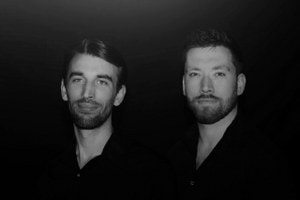
Thaddeus Yeiser was born in Butler, Pennsylvania and later lived all over the Keystone state including Erie, York, Selinsgrove and Harrisburg. He studied broadcasting and film in college and helped run a sports radio station. He now works in Sales Management in Delaware. When he’s not writing, you can find him soaking up nature or following his favorite sports. He is a student of history and a lover of scotch.

Conrad Bair was born and raised in Wellsboro, Pennsylvania. He studied biology and philosophy in college and has worked in Healthcare ever since. Primarily he enjoys hiking around the country, but visiting family in Pennsylvania is a close second. He lives in Arizona with his long-time partner and two spoiled house cats. He loves writing, painting and music.

Facebook * Twitter * Twitter * Twitter * Instagram Instagram * Instagram * Bookbub * Bookbub


Follow the tour HERE for special content and a giveaway!

$10 Amazon